
The Ultimate Competitor SEO Analysis Guide
Ever wonder why a competitor’s blog post outranks yours, even though your content is better? You’re not alone. Most site owners in competitive niches — including pet care and dog fencing — lose traffic simply because they never followed a proper competitor SEO analysis guide to study who they’re actually up against.
This isn’t about copying someone else’s homework. It’s about reverse-engineering what’s already working in your industry, then doing it smarter. Once you know where your competitors are winning (and where they’re weak), you stop guessing and start building a content strategy backed by real data.
Let’s break down exactly how it works, step by step.
Quick Answer: What Is a Competitor SEO Analysis?
A competitor SEO analysis guide walks you through identifying your top-ranking competitors, then studying their keywords, backlinks, content structure, and technical setup to find gaps you can exploit. The goal is simple: discover what’s driving their rankings and build a stronger, more targeted strategy than theirs.
Why You Need a Competitor SEO Analysis Guide
Search engines reward relevance and authority. If you don’t know what “relevant and authoritative” looks like in your niche, you’re flying blind — which is exactly why a solid competitor SEO analysis guide matters.
Here’s what a proper analysis gives you:
- A shortlist of keywords you’re missing that competitors already rank for
- Insight into content gaps you can fill with better, more thorough resources
- A map of where competitors get their backlinks, so you can pursue similar ones
- A clear picture of technical issues that might be holding you back or giving competitors an edge

A Real-World Example
Say you run a dog fencing website. Following this competitor SEO analysis guide, you might discover a rival site ranks #1 for “best invisible fence for large dogs” simply because they have a detailed comparison table and video demo — something your page lacks.
Step 1: Identify Your Real Competitors
This sounds obvious, but most people get it wrong. Your “competitors” for SEO purposes aren’t always the businesses you compete with directly — and any good competitor SEO analysis guide will tell you that.
Two types of competitors matter:
- Direct competitors — companies selling similar products or services (e.g., other dog fence brands)
- SERP competitors — any site ranking on page one for your target keywords, even if it’s a blog, forum, or review site
To find them, search your main keywords (“best wireless dog fence,” “how to install an invisible fence”) and note who consistently appears in the top 5 results.
Common Mistake
Don’t just list the brands you already know. A pet-lifestyle blog with no products to sell can still outrank you if their content is more comprehensive. Treat them as competitors too.
Step 2: Analyze Their Keyword Strategy
The next stage of any competitor SEO analysis guide is figuring out what keywords are actually driving your rivals’ traffic.
What to look for:
- Keywords they rank for that you don’t (keyword gaps)
- Keywords where you both rank, but they rank higher (quick-win opportunities)
- Long-tail, question-based keywords they’re capturing (great for FAQ and blog content)
Most SEO tools (Ahrefs, SEMrush, Ubersuggest) offer a “competitor keyword gap” feature that automates this comparison. Even free tools like Google Search Console can show partial data if you already have some visibility.
[Internal Link: How to Choose the Right Invisible Fence for Your Yard]
Step 3: Study Their Content Structure
Rankings aren’t just about keywords — they’re about how well content satisfies search intent. Open your top 3 competitors’ pages and evaluate:
- Word count — are they thorough, or thin and outdated?
- Headings and structure — do they answer questions clearly with H2/H3 tags?
- Media use — images, videos, comparison tables, infographics
- Freshness — when was it last updated?
Pros & Cons of Content Gap Analysis
✓ Pros:
- Reveals exactly what topics your audience cares about
- Helps you build more comprehensive, link-worthy content
- Shows formatting patterns (tables, FAQs) that Google favors
✗ Cons:
- Can lead to “content bloat” if you copy structure without adding real value
- Time-consuming if done manually across many competitors
- Doesn’t account for brand voice or unique expertise
Step 4: Audit Their Backlink Profile
Backlinks remain one of Google’s strongest ranking signals, which is why every thorough competitor SEO analysis guide dedicates real time to this step.
Steps to follow:
- Plug competitor URLs into a backlink checker (Ahrefs’ free tool, Moz Link Explorer, or SEMrush)
- Sort by Domain Authority to prioritize high-value links
- Identify patterns — are they getting links from pet blogs, vet directories, or local news sites?
- Reach out to those same sources with your own content pitch
Practical Tip
If a competitor got featured in “Top 10 Dog Safety Products” roundups, that’s a replicable opportunity. Pitch your product to the same publications with a fresh angle.
[Internal Link: Invisible Fence Wire Repair: A Step-by-Step Guide]
Step 5: Check Technical SEO Health
Even great content won’t rank if the site is slow or hard to navigate. Compare these technical factors between your site and competitors’:
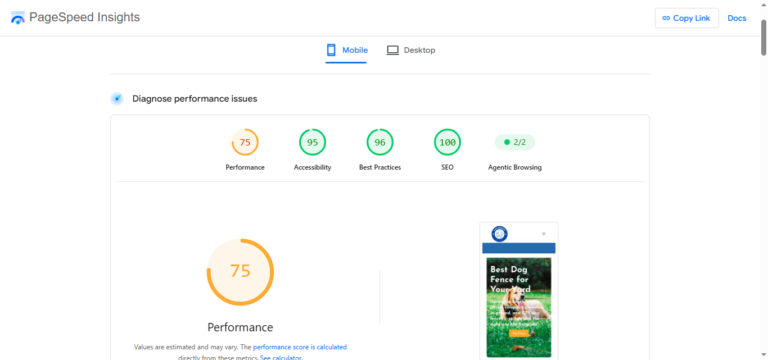
- Page load speed (use Google PageSpeed Insights)
- Mobile responsiveness
- Site architecture and internal linking
- Core Web Vitals scores
- HTTPS security and clean URL structure
A technically weaker competitor with strong content can still outrank a technically excellent site with thin content — but when both are close, technical SEO becomes the tiebreaker.

Step 6: Evaluate Their On-Page SEO
The final piece of this competitor SEO analysis guide looks at how competitors optimize individual pages. This includes:
- Title tags and meta descriptions (are they compelling and keyword-rich?)
- URL structure (short and descriptive vs. long and cluttered)
- Use of schema markup (FAQ schema, product schema, review stars)
- Internal linking to related guides
This is often where smaller, scrappier sites beat bigger competitors — good on-page SEO costs nothing but attention to detail.
Comparison Table: Top Tools for a Competitor SEO Analysis Guide
| Tool | Key Highlight | Best For | Rating/Durability |
|---|---|---|---|
| Ahrefs | Deep backlink and keyword gap data | Agencies and serious SEO teams | ★★★★★ |
| SEMrush | All-in-one suite with content audit tools | Full-site competitor tracking | ★★★★★ |
| Ubersuggest | Budget-friendly keyword and traffic estimates | Small businesses and beginners | ★★★★☆ |
| Moz Pro | Strong domain authority metrics | Link-building focused strategies | ★★★★☆ |
| Google Search Console | Free, first-party ranking data | Verifying your own performance | ★★★☆☆ |
Common Mistakes to Avoid in Your Competitor SEO Analysis Guide
Even experienced marketers slip up here. Watch out for these traps:
- Analyzing too many competitors at once — focus on your top 3–5, not 20
- Copying content instead of improving on it — Google rewards originality and depth
- Ignoring local competitors — if you sell dog fencing regionally, local SEO players matter just as much as national brands
- Treating this as a one-time task — a good competitor SEO analysis guide should be revisited quarterly, since rankings shift constantly
Turning Your Competitor SEO Analysis Guide Into Action
Data alone won’t move the needle. Once you’ve gathered your findings, prioritize action items by impact:
- Fix quick wins first — pages ranking on page 2 that need minor tweaks
- Fill major content gaps — topics competitors cover that you don’t
- Pursue realistic backlink opportunities — sites likely to feature your brand
- Address technical issues — especially site speed and mobile usability
[Internal Link: Best Dog Collars to Pair With an Invisible Fence]
Frequently Asked Questions
How often should I follow a competitor SEO analysis guide?
Every 3–4 months is ideal. Search rankings and competitor strategies shift often enough that quarterly check-ins keep your strategy current without overwhelming your team.
What’s the difference between competitor analysis and keyword research?
Keyword research focuses on finding terms people search for. A competitor SEO analysis guide uses those keywords plus backlink, content, and technical data to understand why competitors rank for them.
Do I need paid tools to analyze competitors?
No. Free tools like Google Search Console, Google’s “People Also Ask,” and manual SERP review can get you started. Paid tools simply save time and offer deeper data.
How many competitors should I analyze?
Stick to 3–5 top-ranking competitors per keyword cluster. Analyzing too many dilutes your focus and makes it harder to prioritize action.
Final Thoughts
A competitor SEO analysis guide isn’t a one-and-done task — it’s an ongoing habit that keeps your content strategy sharp. Start small: pick your top three competitors, study their keywords and content gaps, and build from there using the framework in this competitor SEO analysis guide.
The businesses that win in search aren’t always the biggest. They’re the ones paying closest attention.